


New to New Zealand
Welcome to New Zealand and the Waikato region. Volunteering is a great way to feel part of your new community. You will get to meet people, learn about kiwi culture and gain local experience and references.

What is Volunteering?
Volunteering means giving your time to help others without being paid. In New Zealand, many community groups, charities, and sports clubs rely on volunteers. There are many ways to get involved – whether you enjoy working with people, being outdoors, using practical skills, or supporting behind the scenes.

Who can volunteer in New Zealand?
Anyone can! If you hold a student, visitor, or work visa you can volunteer in New Zealand, providing you will not receive any gain or reward for the activity that you volunteer for.

International Students
If you are a student at the University of Waikato check out their program Employability Plus Award (EPA) which is a great way to connect with local non-profit organisations and be part of their volunteer recognition programme.
Tips to find a volunteer role
- Look local
Find roles in your town or neighbourhood – especially if you don’t have a car.
Tip: Use the location filter when searching, e.g. Hamilton. - Be realistic with your time
Choose a role that fits your schedule. Most organisations expect regular commitment. - Choose a role you are interested in
Apply for roles that match your interests, skills, and availability.
Tip: Use the Category and availability filter when searching, e.g. Evenings/Weekend - Limit your applications
Only apply for 2–3 roles at a time so you can focus on the ones that suit you best. - Check the English level needed
Some roles may need good English for safety or communication reasons – check the description before applying. - Don’t be afraid to ask
New to Kiwi culture or unsure what something means? Just ask, we are happy to help.
New to NZ Volunteer story
Check out our helpful newcomer guides to learn more about volunteering in New Zealand.
For detailed information, please download and read the PDF document linked below.
Download PDFFor detailed information, please download and read the PDF document linked below.
Download PDFFor detailed information, please download and read the PDF document linked below.
Download PDF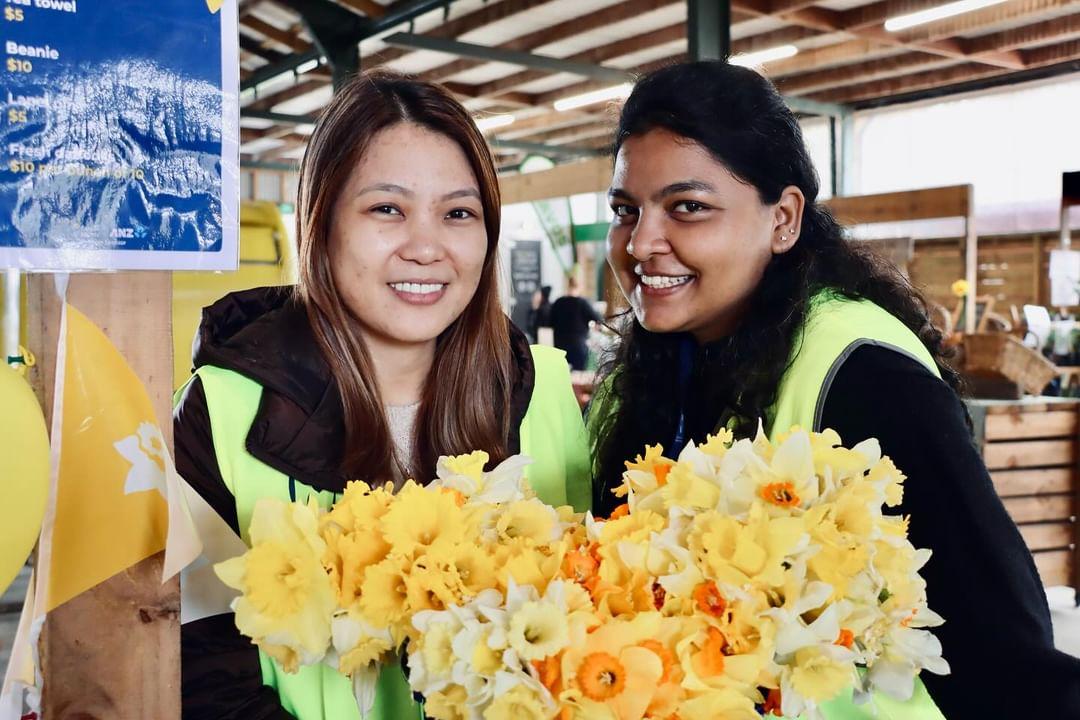
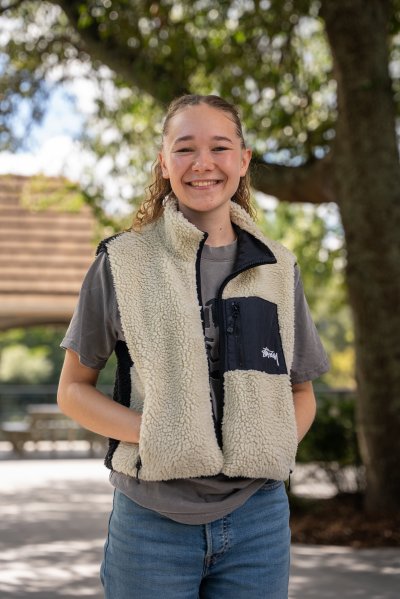
Keira’s Story: Young Heart, Big Impact
When Keira first signed up as a volunteer with the Cancer Society Waikato/Bay of Plenty, she was just 14 years old. While most teens might have been relaxing after school, Keira was pulling on a hairnet and apron, ready to serve dinner and lend a hand with a smile at the Cancer Society’s Lions Lodge.
Every Monday evening, she showed up. For four years. Guests at the Lodge, many of whom are away from home while undergoing cancer treatment at Waikato Hospital, quickly came to know Keira not just for her help in the kitchen but for her warm, friendly presence. “Being a kitchen assistant at the Lodge is more than serving up dinner and clearing things away afterwards,” Keira says. “We make sure everyone’s all right and having a good time.”
Alongside her regular volunteering, Keira helped launch Daffodil Day fundraising at her school, St Peter’s, creating a platform others can now build on. She also got involved with Relay For Life 2024 and 2025, creating social media content that brought a fresh, student voice to the event.
Even now, as a full-time science student at Auckland University, she still finds time to give back, recently helping again at Relay For Life 2025. Her energy and enthusiasm have had a ripple effect, inspiring others to follow her lead. In fact, two new student volunteers at the Lodge signed up after hearing about Keira’s impact.
She once said, “We think we don’t have much of an impact because, you know, we’re just kids…” But anyone who’s met her knows Keira is proof that age has nothing to do with making a difference.
Richelle’s Story: From Newcomer to Thriving Volunteer
When Richelle moved to New Zealand in July 2023 to study law at the University of Waikato, she didn’t know many people, but she did know that volunteering could help her feel at home.
Having already volunteered back in her home country, Richelle naturally turned to it again to settle into life in Hamilton. Since then, she’s given her time and skills to a range of community organisations, from offering support at the Citizens Advice Bureau to helping at the Cancer Society’s Relay for Life. On campus, she got stuck into university life as an international student coordinator and activity coordinator, making connections and finding her place.
Looking back, Richelle says volunteering was one of the best things she did when she arrived. “Volunteering helped me understand New Zealand’s work culture, where clear communication and teamwork are highly valued,” she explains. It also gave her the opportunity to build a local network and meet people from different backgrounds and industries.
Even now, after moving cities and starting full-time work, Richelle still makes time for volunteering when she can. “Since moving to a new city and starting a new job, I haven’t been able to commit to regular volunteering, but I still try to stay involved through one-off events when I can,” she says.
For Richelle, volunteering has never just been about giving back. It’s been about connection. “You meet so many different people and hear their stories. Those connections are the reason I keep going back.”
Her top tip is to find a cause you genuinely care about. “When you’re passionate about what you’re doing, you won’t need any external motivation to stay committed.”
Tricia’s Story: Empowering Through English
Imagine teaching someone a language to the point where they can go on to study in that language. That’s exactly what Tricia did while volunteering with English Language Partners.
After hearing about English Language Partners and the programmes they offered from a neighbour, Tricia decided it was where she wanted to volunteer. With a strong interest in languages and other cultures, it felt like the perfect fit. Three and a half years have passed since then, and Tricia has worked one on one with six different learners. But through those six, she has impacted many more, as their families also benefit from their learning.
She describes the experience as a privilege. “Seeing the light in someone’s eyes when they are able to have a conversation with you is so rewarding,” she says.
Tricia’s advice to anyone thinking about volunteering with English Language Partners is that it might feel scary at first, but the support from the team is incredible. “The whole experience is so rewarding. It feeds your soul.”
Sandidi’s Story: Why Not Start Now?
Sanidi began volunteering in Year 9 after noticing a need in her school community and deciding to do something about it. She started by helping in the school’s Kai Kitchen, providing breakfast to students and their families. From there, her involvement grew.
She began tutoring and helping out at the K Centre, an after-school programme for children that offers a range of activities including ballet, which Sanidi taught herself.
As time went on, Sanidi’s volunteering extended beyond school. She now gives her time to the Red Cross shop and The Serve Trust, and in December you’ll find her wrapping gifts as part of Volunteering Waikato’s Christmas Gift Wrapping fundraiser.
Her advice to other high school students is to start volunteering early, before Year 13. She believes that when you begin young, you are more likely to volunteer just to help and to discover what you are passionate about.
Liam’s Story: From School Garden to Community Advocate
Liam’s journey started small, helping tidy up the garden at his primary school. That simple act sparked a love for giving back, which grew into conservation projects and, eventually, the creation of his own organisation: Ride Your Trike NZ.
Through Ride Your Trike NZ, he now shares that experience with others—helping people who, because of age, disability, or a need for extra stability, might struggle on a regular bike. His goal is simple: to give everyone the chance to enjoy the fun of cycling.
His volunteering has always focused on creating a community where everyone can participate. That passion even led him into local politics this year, volunteering with the Sarah Thomas for Mayor campaign to help give accessibility a bigger voice in local decisions.
He gives roughly 40 to 50 hours every week to causes he believes in. Volunteering isn’t just something he does; it’s his lifestyle.
Mirasol’s Story: Finding Belonging Through Volunteering
Mirasol generously gives her time and expertise to the accounting department at the Refugee Orientation Centre (ROC) in Hamilton. Originally from the Philippines, she began her volunteering journey with a desire to expand her social circle, immerse herself in the local culture, and learn more about New Zealand’s accounting practices.
Since arriving, Mirasol has volunteered with several community organisations. Along the way, she has not only gained valuable professional insights but also experienced personal growth and built strong connections. Her involvement has become more than just a way to give back; it has become a way to belong.
Her advice to anyone considering volunteering is simple: just do it. She admits it can feel intimidating at first, especially in a new environment, but encourages others to push past the nerves. With time, those initial fears fade, replaced by confidence, ease, and a real sense of achievement.
“Volunteering has helped me grow, both professionally and personally,” she shares. “It is a way to connect, to learn, and to be part of something bigger.”
Morgan’s Story: Helping Families Find Home
Morgan began volunteering with the Hamilton Multicultural Centre Trust’s New Kiwi Settlement Programme. This programme helps former refugee families settle into their new lives and homes in Aotearoa.
During his time volunteering with HMS, Morgan has worked with two families and plans to support a third in the coming months. He describes the experience as incredibly satisfying, noting how fulfilling it is to watch families progress from dependence to independence.
One of Morgan’s favourite memories is building relationships with the children. One family had two young children who were very shy at first. However, after about a month, they became fully comfortable with him and would greet him at the door with open arms.
Volunteers like Morgan make a world of difference. Simply teaching these families everyday tasks, like how to catch the bus or when to put the recycling out, can have a significant impact.